Collaboration Between RWA Infrastructure in
Thailand and South Korea
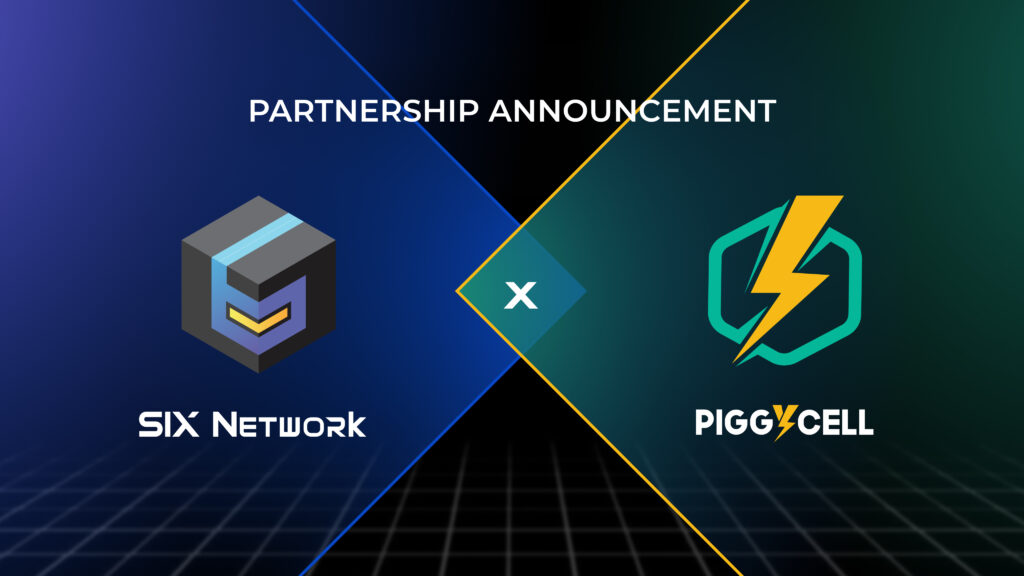
The collaboration between SIX Network and Piggycell will focus on knowledge exchange, network expansion support between Thailand and South Korea, and the exploration of opportunities in blockchain development, RWA Tokenization, and solutions related to physical assets at the regional level.
Piggycell views everyday energy as one of the essential infrastructure layers for modern cities, including power banks, charging stations, and small-scale energy service points. Although these energy transactions occur at a micro level, collectively they represent a significant volume of daily usage. This can be further developed into a blockchain-managed system to enhance transparency and enable greater participation from users and businesses.
One of Piggycell’s use cases is the connection of charging stations or small-scale energy devices with NFTs, which serve as on-chain representations of ownership for real-world devices. Each node can be linked to usage data, service status, and activity records connected to smart contracts. This approach reflects the application of RWA and DePIN at the real infrastructure level, enabling real-world assets to be managed, operated, and participated in through blockchain systems.
At the same time, SIX Network continues to develop blockchain infrastructure for systematically bringing real-world assets into digital systems, with a focus on real-world usability, reliability, interoperability, and long-term business scalability.
Thailand and South Korea each bring readiness in different dimensions, including technology, digital users, business infrastructure, and digital economy growth. This partnership is therefore not only a connection between two companies but also another step toward building a bridge between the Web3 ecosystems of both countries, helping bring RWA applications closer to real-world adoption.
Expanding the Role of RWA From Regional
Collaboration to Global Opportunities
For SIX Network, the goal of RWA does not stop at bringing assets onto the blockchain. It is about growing alongside the increasing value and diversity of the global RWA market, including assets from financial institutions and new asset classes that can be systematically connected to digital systems.
This direction aligns with SIX Network’s roadmap this year, as we continue to explore more collaboration opportunities with assets from the financial institution sector, while expanding the range of asset types on SIX Protocol to support broader RWA use cases across regional and global contexts.
The partnership with Piggycell is therefore another important milestone in connecting the potential of the Web3 ecosystems between Thailand and South Korea. It also opens opportunities for both parties to jointly explore new RWA applications that can be expanded into regional and global markets in the future.
For SIX Network, this partnership reflects our commitment to developing RWA that not only supports usage within a single country but also extends into the context of DePIN and physical infrastructure connected to Web3. It further enables the connection of users, businesses, and real-world assets across markets, industries, and ecosystems, laying the foundation for sustainable and practical growth at a global level.