fbpx

Dairy Cows Tokenized on Blockchain for Loan Collateral in Brazil

Dairy Cows Tokenized on Blockchain as Loan Collateral in Brazil

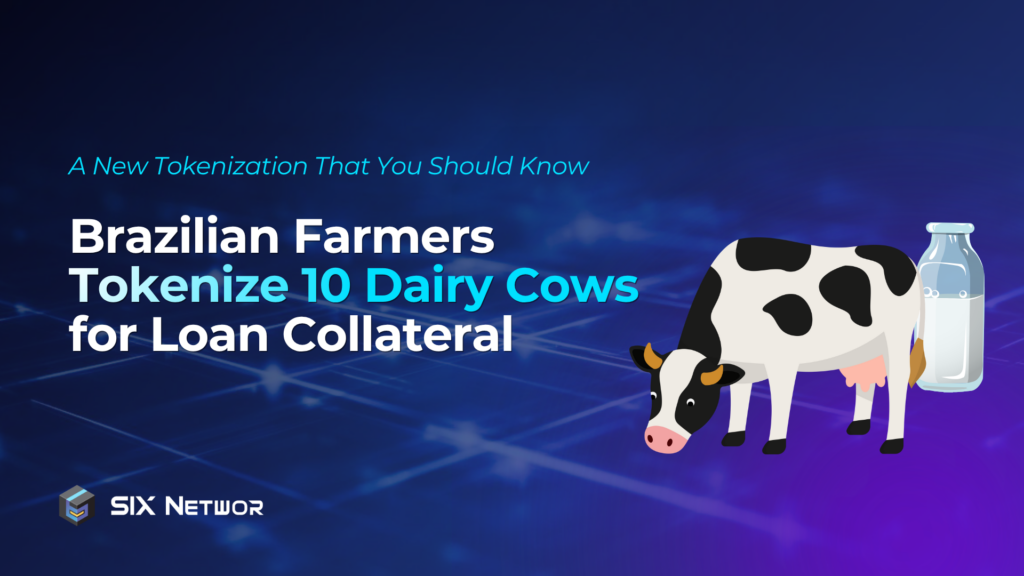
Before this, we shared the story of tokenizing Pokémon cards to use as loan collateral, a use case that worked because the asset could be graded and its current value verified. But Brazil just surprised us again, with news that farmers tokenized 10 dairy cows on the blockchain to use as loan collateral.


This happened at Fazenda Engenho Velho farm in Imbituva, Paraná state, Brazil, where a group of farmers did something no one had done before. They turned 10 dairy cows, worth roughly R$120,000 (about $23,000), into tokenized collateral, securing a first loan of R$100,000 (about $19,400) through a CPR-F, a Brazilian rural credit certificate that lets farmers borrow against livestock or agricultural output. Importantly, the deal was registered on B3, Brazil’s main stock exchange, marking the first time livestock has been formally accepted as financial collateral on a stock exchange.

Why Can a Cow Become Digital Collateral


The usual problem for small farmers is that banks are reluctant to accept livestock as collateral, since it’s hard to verify. It normally requires sending an inspector to the farm in person, and lenders typically discount the appraised value by as much as 60% to offset the risk, leaving farmers able to borrow far less than their herd is actually worth.


Cowmed, a Brazilian agtech startup, solved this by fitting each cow with a “Smarty Collar,” an AI powered sensor collar that continuously tracks health, behavior, and location in real time. That data is encrypted and tied to a unique digital ID for each cow on the blockchain, letting lenders verify an animal’s identity and condition at any time without visiting the farm, while also preventing the same cow from being pledged as collateral more than once.


The Opportunity for Tokenization in Agriculture


Cowmed already tracks over 100,000 cows across more than 1,000 farms in Brazil and neighboring countries, worth a combined R$2 billion (about $395 million). The company estimates that if 20% of farms in its network adopt this model, it could unlock as much as R$400 million (about $77.6 million) in new agricultural credit.


This is a clear example of how RWA tokenization isn’t limited to stocks, bonds, or gold. It’s reaching tangible assets that are part of everyday life for people working in agriculture, opening a window into how RWA tokenization is being developed worldwide to give people who lack access to traditional finance a real way to reach capital.


Follow every update at
Website: https://six.network/
X: https://x.com/theSIXnetwork
FB: https://www.facebook.com/thesixnetwork/


And our community channels:

Discord: http://discord.gg/sixnetwork
Telegram: https://t.me/+0BmqYVoV5j5lN2Jl

⎯⎯⎯⎯⎯⎯⎯⎯⎯⎯⎯⎯⎯⎯⎯⎯⎯⎯⎯⎯⎯⎯⎯⎯⎯⎯⎯⎯⎯⎯⎯⎯

Disclaimer:

1.This article is intended for informational purposes only. Please conduct your own research before making any investment decisions related to cryptocurrencies 2. Cryptocurrency and digital token involve high risk; investors may lose all investment money and should study information carefully and make investments according to their own risk profile.


Don’t miss out follow us at:

Warisara Thepsiri
Warisara Thepsiri

Experience the magic of Blockchain with SIX Network!

Related Posts